Snorkeling Kealakekua Bay: Dolphins, Reef Fish, and the Sea Cave an Earthquake Closed
There's a particular kind of quiet to a 6:30 AM departure on the Big Island. The Kohala Coast was still gray-gold, the lava fields just starting to warm, and we were headed south with snorkel gear and coffee, toward what turned out to be the clearest water of the whole trip.
This was our first snorkel of the week — a morning catamaran tour to Kealakekua Bay, near the little hillside town of Captain Cook. If you're planning a Big Island trip and wondering whether to fit in a guided snorkel, here's the honest answer: yes. And here's how to do it well.
Why Kealakekua Bay is the one to choose
There are plenty of places to get in the water on the Big Island, but Kealakekua Bay is special for a reason that pays off the moment you put your face down. It's a protected Marine Life Conservation District — a true preserve — so the reef here has been left to thrive. On a calm morning the visibility can stretch past 100 feet, the kind of clarity where you forget for a second that there's water between you and the fish.
The bay is also home to the Captain Cook Monument, a white obelisk on the far shore marking the spot tied to the explorer's history here. You'll see it from the boat. Most tours anchor near the monument, where the reef drops off and the marine life gathers.
A note for the 55+ crowd, because I know some of you are wondering: this was very manageable. We went out on a power catamaran with a clean swim platform, a ladder, and a crew that kept an eye on everyone. You don't have to be a strong swimmer to enjoy this — a pool noodle is your friend, and there's no shame in floating and looking. That's the whole point.
The dolphins — and the right way to share the water with them
The highlight came before we even got in the water.
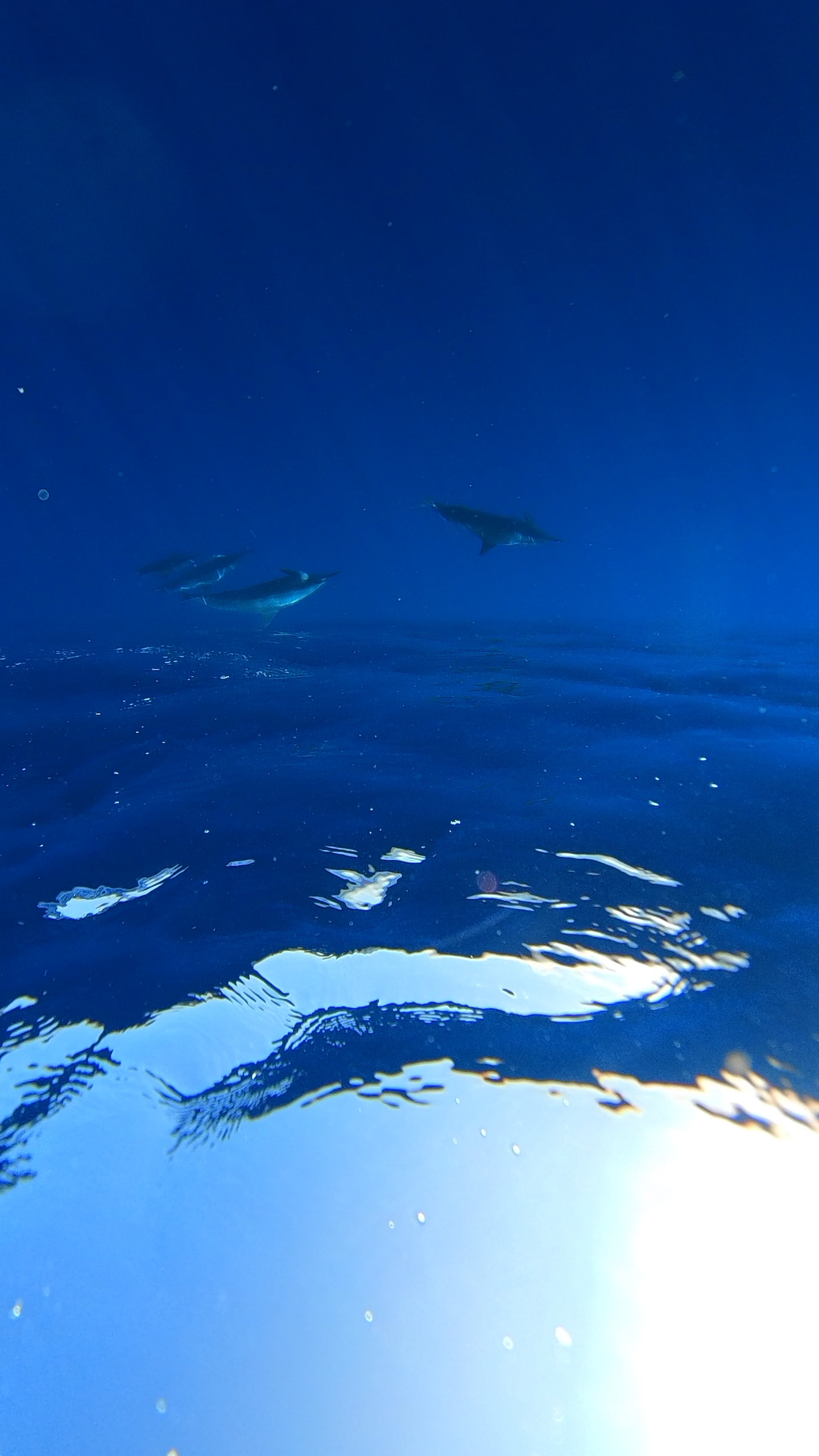
Kealakekua is one of the resting bays for Hawai'i's spinner dolphins (nai'a), and on the right morning a pod will be there, spinning and surfacing in the early light. We were lucky — they came through near the boat, and our captain throttled down and simply let them pass. No chasing, no maneuvering to cut them off. We watched.
I want to linger on that, because it matters. Since 2021, federal law has made it illegal to swim with, approach, or remain within 50 yards of Hawaiian spinner dolphins — and that applies to swimmers, kayakers, paddleboards, and boats alike. These bays are where the dolphins rest during the day after hunting all night, and the rule exists so they can do that undisturbed. Kealakekua is specifically one of the bays it was written to protect.
The good news: you don't need to be close to be moved by them. A pod surfacing together in glassy morning water is something you'll remember whether you're 50 yards out or 500. If a dolphin chooses to swim near the boat on its own, that's the ocean's gift — the rule is about not pursuing them. A reputable operator will know this and behave accordingly. (A small tip: if a tour page promises you'll "swim with wild dolphins" in these waters, that's a red flag. The honest ones say "watch.")
I did manage to pull a single underwater still of one gliding past — frozen from a video clip, because the real thing moved far faster than my camera wanted to. It's one of my favorite frames from the trip.
Under the surface: the reef show
Once we were in the water, the bay did not disappoint.
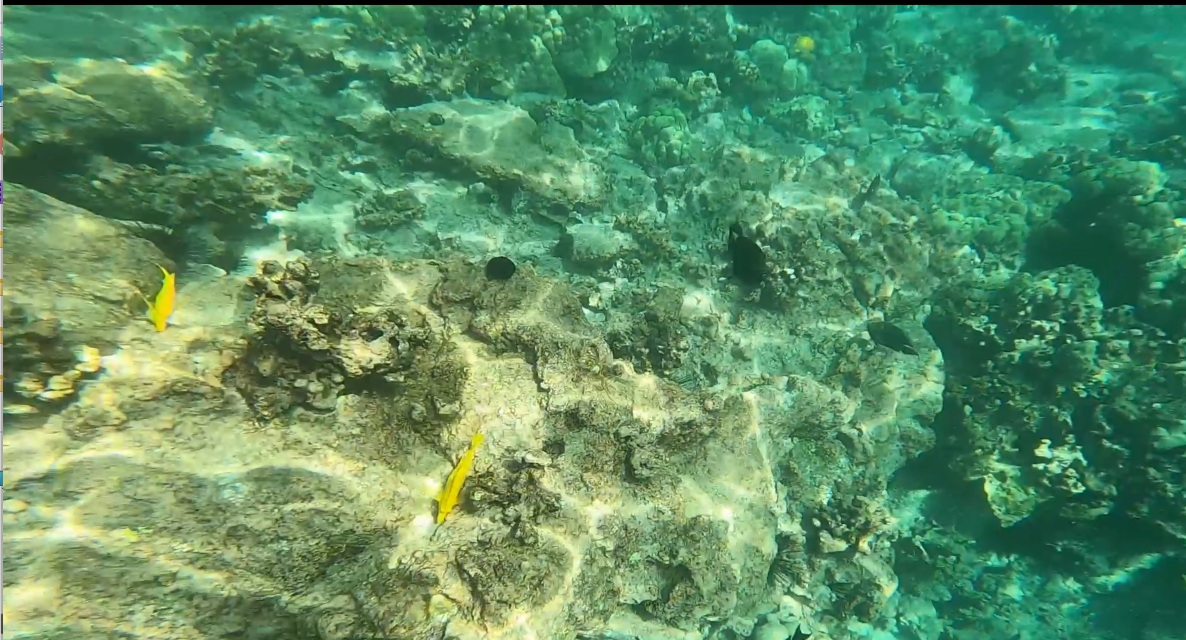
The reef here is busy in the best way. Schools of bright yellow tang (lau'īpala) drifted past in golden clouds. We spotted the humuhumunukunukuāpua'a — Hawai'i's state fish, the little reef triggerfish with the painted face and the gloriously unpronounceable name. Add to that Moorish idols, butterflyfish, parrotfish (uhu), trumpetfish, and the striped Hawaiian sergeants, and you've got a reef that feels genuinely alive rather than picked over.
And if you're patient, the honu. Green sea turtles cruise this coastline, unbothered and graceful, and there's nothing quite like watching one glide beneath you. Just remember to give them space too — admire, don't reach.
The Grotto — the sea cave an earthquake closed
Here's the part I didn't expect — and the detail I keep telling people about.
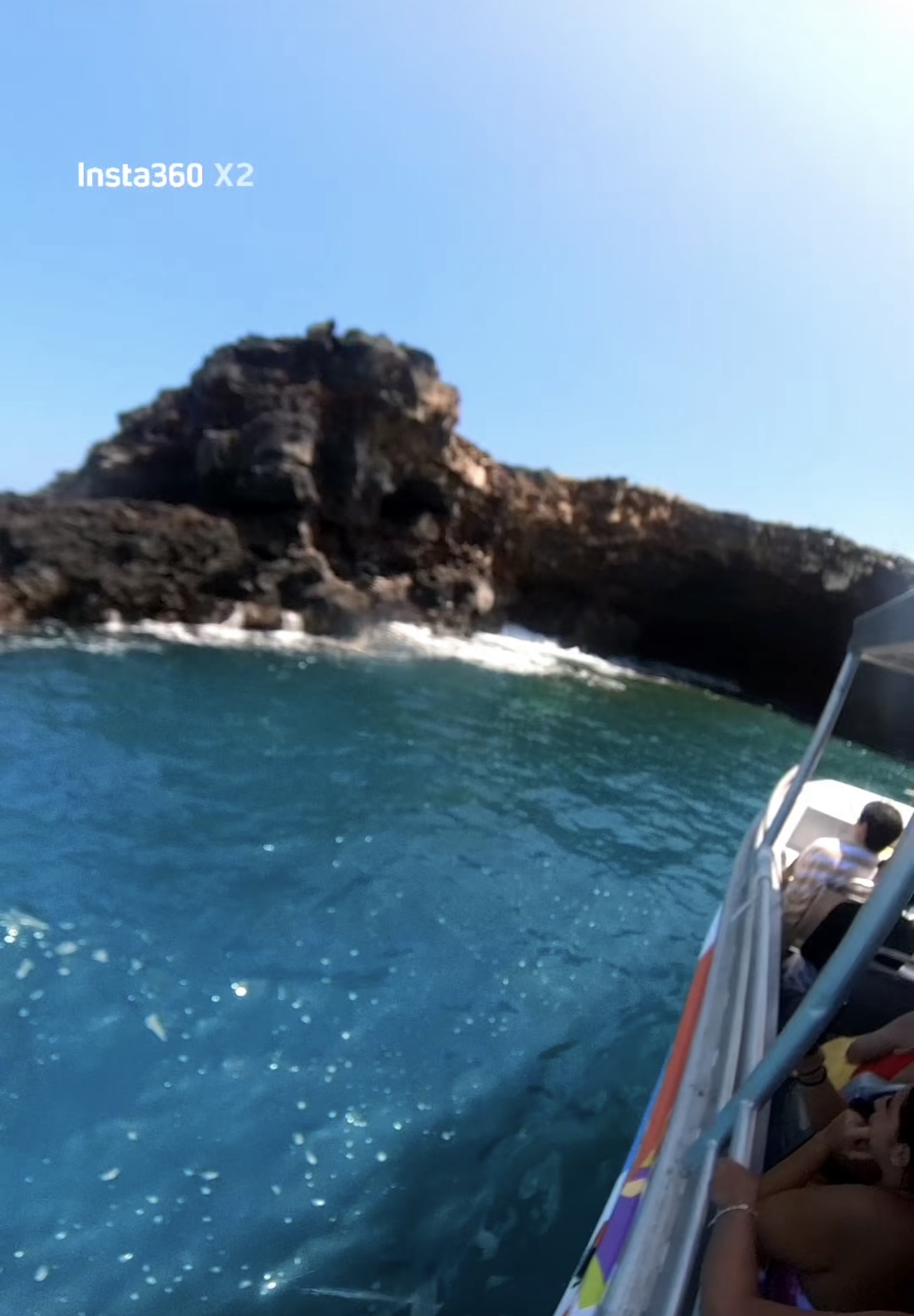
Along this stretch of the Kona coast there's a feature the crew call the Grotto — a natural rock formation that boats can usually nose right up to, a dramatic little finale to the tour. We didn't get to go in.
Our second mate told us its story, and it's a good one. Back when Kona coffee first became the region's crop, there were no real harbors along this rugged coast — so beans and goods were paddled out by canoe to ships waiting offshore, and this spot was part of that old trade. Over the years the formation collapsed, and when it did, it exposed some of the longest lava flows on this part of the coast — one of them, he said, running about three miles out into the water.
But the rocks piled in the water out front? Those are new. A big earthquake just a few weeks before our visit had shaken part of the structure loose — "that's what all these rocks are," he told us — and it's no longer safe to bring the boat in close. We were, in other words, looking at a coastline that had literally changed shape weeks before we arrived.
It was a small disappointment in the moment, but it became the most interesting story of the day. This is a living, volcanic island — the ground here genuinely moves and rearranges itself. We sat just outside, the mate told the story, and it turned into one of those travel moments that's better than the postcard would have been. The island reminds you, gently, who's in charge.
Know before you go
A few things that will make your Kealakekua morning smoother:
Go early. Morning tours get the calmest water, the best visibility, and the best odds of seeing dolphins resting in the bay. We left our Waikoloa-area base around 6:30 AM for an 8:00 AM departure, and it was worth the early alarm.
Reef-safe sunscreen only. Hawai'i has banned sunscreens with oxybenzone and octinoxate to protect the reef. Bring a mineral (zinc-based) sunscreen, and apply it before you board so it has time to set.
Pick a tour that includes gear and lunch. Ours did, which made the morning effortless — no rental stops, no packing a cooler. Look for that.
Bring a light layer for the boat. Early mornings on the water can be breezy even in Hawai'i. A rash guard does double duty: sun protection in the water, warmth on deck.
Manage your expectations on the dolphins. They're wild and they're protected. Some mornings the bay is full of them; some mornings you'll just have the reef. Both are wonderful. Treat the dolphins as a bonus, not a guarantee, and you'll never be let down.
Book it
If you want to do this exact kind of morning, a guided Kealakekua Bay catamaran snorkel is the easiest way — gear, crew, and the bay's best spots, all handled.
👉 Book a Kealakekua Bay & Captain Cook Monument snorkel tour here
Disclosure: This post contains affiliate links. If you book through them, I may earn a small commission at no extra cost to you. I only recommend experiences I'd send my own family on.
RetiredWife.com
Retirement, one real adventure at a time.
Copyright 2026 | RetiredWife.com™ | Terms & Conditions| Privacy Policy | Affiliate Disclosure