Manta Ray Night Snorkeling on the Big Island: Our Bucket-List Night at Keauhou Bay
There's a moment, floating face-down in the dark Pacific with nothing but a lighted board and a pool noodle holding you up, when your brain quietly asks, "...are we sure about this?" And then a manta ray the size of a kitchen table glides up from the blackness, does a slow barrel roll three feet beneath you, and your brain changes its mind entirely. 🐠
Manta ray night snorkeling had been on my bucket list for years. On our recent Big Island trip, Doug and I — along with our trusty travel crew — finally did it at Keauhou Bay. Spoiler: it was one of the most magical things we've ever experienced, and I'm about to talk you into it.
What is manta ray night snorkeling, exactly?
Off the Kona coast, manta rays gather after dark to feed on plankton. Tour operators take small groups out by boat, shine bright lights down into the water, and the lights attract clouds of plankton — which in turn attract the mantas. You float at the surface and watch these gentle giants swoop, glide, and somersault just below you as they feed. They can have wingspans of 10+ feet, but they're filter feeders — completely harmless, utterly graceful.
Here's what makes Kona so special: you can find manta rays in plenty of places around the world — the Maldives, the Galapagos, the Great Barrier Reef — but most of those encounters happen on deeper dives at "cleaning stations," where the rays go to get tidied up by smaller fish. Kona is one of the only places on earth where you can snorkel right at the surface, at night, and watch the mantas FEED — and where they show up reliably almost every night of the year. That feeding "dinner show" is far more acrobatic than watching them get cleaned, and you don't need to be a scuba diver to see it. 🌊
Keauhou Bay, where we went, is sometimes called "Manta Heaven," and it's also historically special: it's the birthplace of King Kamehameha III. (Little Hawaiian history bonus with your marine magic. 👑)
How did people discover you could do this? (A sweet origin story)
As our crew told it, the whole manta-night experience started almost by accident. Years ago, an oceanfront hotel near Keauhou had lights shining down onto the water at night. Those lights drew in clouds of plankton — and the plankton drew in the manta rays, who came to feed right where everyone could see them. (The way we heard it, folks first noticed one particular ray showing up to feed in the lit-up water, and realized the lights were basically ringing the dinner bell. 🛎️)
That happy discovery — lights attract plankton, plankton attract mantas — is exactly the method every tour still uses today. I'll be honest: I didn't manage to film the crew telling the full story, so I'm sharing it as it was told to us — but I love that something as simple as hotel lights turned into one of the most magical wildlife encounters on the planet. 🌊
How it actually works (it's easier than it looks!)
If you're picturing strenuous scuba diving in the dark — relax. It's nothing like that. Here's the setup:
• A short, calm boat ride takes you out to the site.
• You're given a wetsuit top, mask, and snorkel.
• You hold onto a lighted floating board with your arms stretched out in front of you (full Superman 🦸♀️), and a pool noodle slips under your ankles to keep you horizontal and afloat.
Then you just… float. The mantas come up from below to feed. You don't chase them or dive down — you stay still and let them do their thing.
Because you're holding a float the entire time, even nervous or casual swimmers can do this comfortably. Doug isn't the most confident in the water, and he did wonderfully.
The crew's briefing that cracked us up
Right before we got in, our first mate Makana ran through "a bunch of rules," and they were equal parts important and hilarious. The gist:
Rule #1 — Don't touch the mantas. They come so close you might feel them brush your stomach, face, or arms (totally normal!) — but no touching. And in Makana's words: "don't kiss them, don't lick them, don't give them a nice hand shake — just keep everything to yourself." 😂 (I'm sorry... lick? Who hurt you, previous tour guests?!)
There's a serious reason behind the giggle: manta rays are a protected species in Hawaiʻi. Touching them strips away a protective mucus coating that guards them from infection, so it's not only discouraged, it's illegal. We're guests in their home — admire with your eyes, keep your hands (and tongue 😄) to yourself.
Rule #2 — Keep your camera/phone close. Because the mantas come in so close, they can knock a GoPro or phone right out of your hands. Makana told us to hold on tight: "help me help you." (If you do drop something, the crew will dive down to try to retrieve it for you!)
Rule #3 — Mind your pool noodle. The noodle tucked under your ankles can wiggle and float away — if it does, just call out for the crew.
It fits the theme that ran through our whole trip: respect the island, be a good guest. 🌺
Honest tips from your Retired Wife
A few real-talk things nobody tells you:
• Your arms will get a workout. Holding that outstretched Superman pose — while also trying to film with a GoPro- had my arms and shoulders tired. Add in the 4-mile volcano hike we'd done the day before, and my whole body filed a complaint. 😅 Pace your itinerary; maybe don't stack a big hike right before manta night.
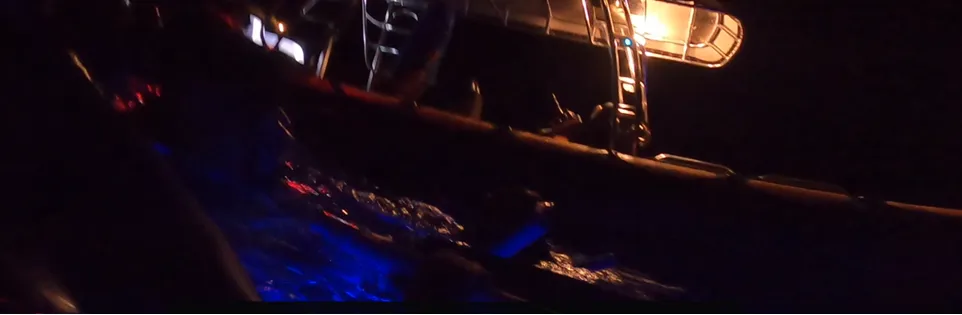
• Manage your camera expectations. It's dark out there, so even a great camera gives you soft, grainy, silhouette- style footage. Lean into the dreamy glow instead of chasing crisp 4K — and honestly, put the camera down for a bit and just experience it. Some moments are better in your memory than on your memory card.
• Hold on with one hand, camera in the other — or go hands-free. The mantas come in close and will actually bump and brush against you as they feed (it's part of the magic!). That motion knocked our cameras out of our hands more than once. My tip for next time: use a chest mount so both hands stay free for the float and your footage stays steady. And if you do drop a camera — tell the crew. They'll do their best to retrieve it for you. 🤿
• Fun thing to watch for: the different tour boats actually link their floating light-boards together in one long line on the water. All those lights combined concentrate the plankton and keep the mantas feeding right there where everyone can see them — a neat bit of teamwork between the companies. 🤝
• Dress and pack smart (see below).
It can be a little chilly getting out, so that dry shirt and towel feel amazing afterward.
What to bring 🎒
Pack lightly! Come wearing your swimwear and sandals, and bring:
• A towel and a dry shirt to change into after
• Gratuity for the crew (cash or electronic payment) — they work hard and make the night special
What's included ✅
• Masks, snorkels, and wetsuit tops
• Complimentary treats and hot chocolate after the tour (which hits just right when you climb back on the boat a l little chilly and a lot happy ☕)
Who we went with
We had a wonderful experience with The Manta & Snorkel Co. – Kona a small, locally-owned crew that keeps groups tiny — just six people — with a quick five-minute ride out to the bay. That intimate little boat made all the difference, and supporting a family-run local operation felt good too. Captain Chris and first mate Makana were professional, safety-focused, and genuinely fun — they made the whole evening feel easy and special from start to finish. We'd recommend them in a heartbeat. Or book direct with The Manta & Snorkel Co → https://www.themantasnorkelco.com/
💛 For all our favorite Big Island tours, gear, and guides in one place, visit my link hub: https://beacons.ai/retiredwife
Add it to your list
If you've ever wondered whether manta ray night snorkeling lives up to the hype — it does, and then some. It's gentle enough for beginners, magical enough to leave you speechless, and the kind of memory that stays with you long after the salt washes out of your hair. 🌊
Have you swum with mantas? Is it on your bucket list? Come tell us on Instagram @retired_wife — and don't miss the rest of our Big Island series on the blog! 🌋🐠
Mahalo for reading,
JoJann (your Retired Wife) & Doug (definitely not the wife, but the somewhat patient husband 😄) 🐠
RetiredWife.com
Retirement, one real adventure at a time.
Copyright 2026 | RetiredWife.com™ | Terms & Conditions| Privacy Policy | Affiliate Disclosure